Why DIY HR Stops Working as Your Business Grows


Running a small business in Australia often means wearing many hats. In the early stages, DIY HR—handling contracts, payroll, policies, and employee issues yourself—can feel efficient and cost-effective.
But as your business grows, DIY HR quietly becomes a risk.
At P&P Consulting, we work with Australian small–medium businesses every day, and one pattern is clear:

This article explains why DIY HR stops working as your business scales, the hidden risks involved, and what smart business owners do instead.

DIY HR refers to business owners personally managing:
📄 Compliance: Drafting employment contracts and ensuring Fair Work compliance.
💰 Payroll & Awards: Navigating complex Awards, classifications, and correct pay rates.
⚖️ Lifecycle Management: Handling leave requests, performance management, and terminations.
🛡️ Governance: Creating policies, procedures, and conducting workplace investigations.
👷 Safety & Relations: Managing WHS (Work Health and Safety) and sensitive employee relations issues.
In Australia, this often means copy-pasting templates, relying on outdated advice, or “learning as you go.”
That approach works—until it doesn’t.


Australia’s workplace laws are complex and change frequently.
As your team grows, so does your exposure to:
Fair Work Act breaches
Underpayment claims
Award misclassification
Unfair dismissal applications
General protections claims
WHS non-compliance penalties
What might seem like a small oversight can result in tens of thousands of dollars in penalties—or worse, reputational damage.
DIY HR lacks the depth and monitoring required for compliance at scale.


When you have:
1–3 employees → mistakes are manageable
5–10 employees → mistakes become patterns
15+ employees → mistakes become legal liabilities
Common DIY HR pain points include:
Inconsistent disciplinary actions
Poorly documented performance issues
Emotion-driven terminations
Conflicting or missing policies
At scale, “I didn’t know” is not a defence under Australian employment law.

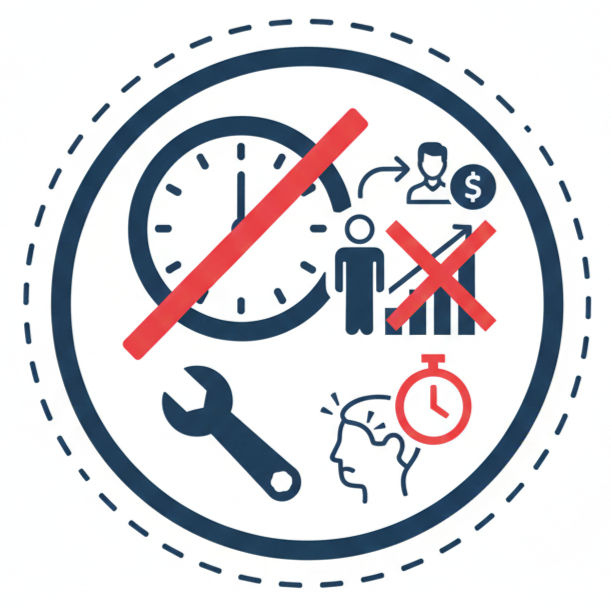
Every hour spent on HR admin is an hour not spent growing your business.
Business owners often underestimate how much time HR consumes:
Managing conflict
Answering HR questions
Updating policies
Responding to employee complaints
Fixing payroll or contract errors
As your business grows, HR becomes a strategic function, not a side task.


Early employees may tolerate informal processes. Growing teams do not. As businesses scale, employees expect:
Clear policies and procedures
Consistent decision-making
Fair performance management
Transparent communication
Safe, compliant workplaces
Without proper HR frameworks, you risk:
Low morale
High turnover
Workplace conflict
Loss of high-performing staff


Businesses stall when owners fear:
Hiring the wrong person
Terminating underperformers
Expanding into new states
Managing hybrid or remote teams
Professional HR systems remove that fear by providing:
Clear processes
Legal confidence
Scalable people frameworks
Strategic workforce planning
Growth requires structure. Structure requires HR expertise.

You should strongly consider professional HR support when:
You have 5 or more employees
You’re managing performance or behavioural issues
You’re hiring rapidly
You’ve received a Fair Work query or complaint
You’re unsure if your contracts or pay rates are compliant
You want to scale without constant people problems

At P&P Consulting, we specialise in HR solutions for Australian small–medium businesses, including:
✔ HR compliance aligned with Fair Work Australia
✔ Employment contracts and award interpretation
✔ Performance management and termination support
✔ HR policies and procedures
✔ Ongoing HR advisory for growing teams
✔ Risk mitigation and people strategy
We don’t just “fix problems”—we build HR systems that grow with your business.

DIY HR might help you start your business. But professional HR helps you scale it. If your business is growing, your HR approach needs to grow too.



Comments